Industrial brakes


Beyond the brake: the strategic role of the disc
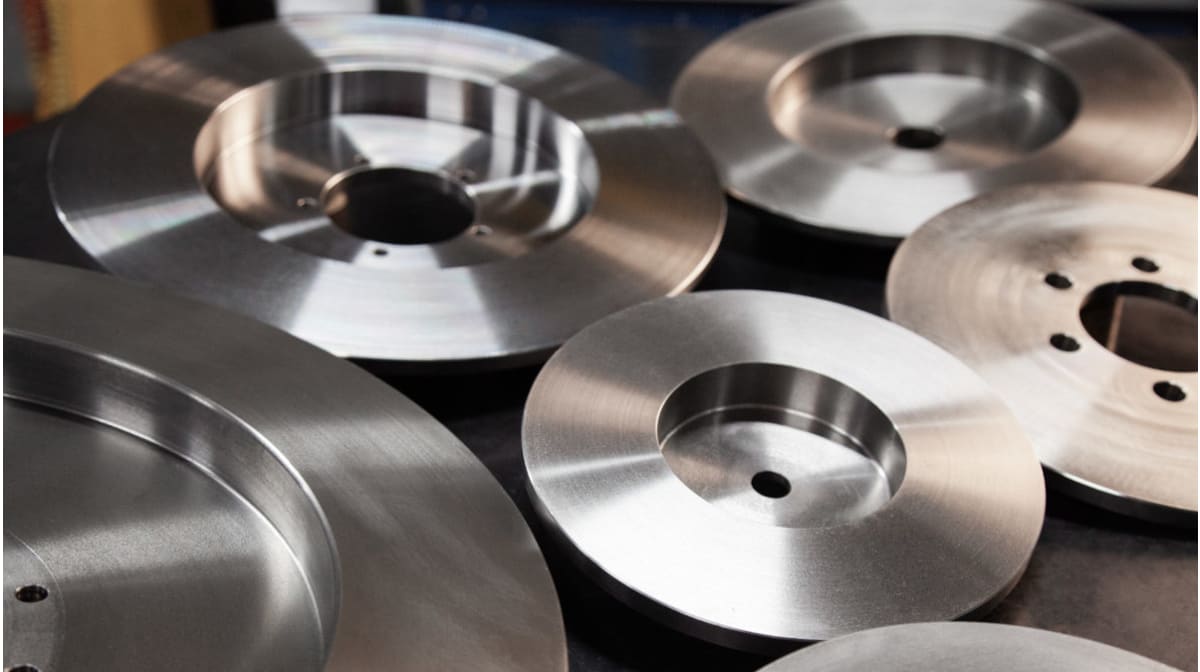
When designing an industrial braking system, selecting the brake itself is just one part of the equation. To guarantee performance and operational continuity, the brake disc also serves as a structural and functional component, as it directly influences torque transmission, thermal balance, and system durability.
To achieve reliable results, Coremo selects the disc in combination with the brake and the friction material, carefully evaluating all application variables. An incorrect disc configuration can compromise braking torque, heat dissipation capacity, friction coefficient stability, and overall service life.
Disc brake selection criteria
Disc sizing requires a structural technical assessment of operating conditions and performance targets. Key variables include:
- required braking performance, both static and dynamic, expressed in torque and power to be dissipated;
- environmental conditions, such as high or low ambient temperatures, dust, humidity, aggressive chemicals, or marine exposure;
- machine parameters, including rotational speed, inertia, and engagement frequency;
- friction material type, which affects wear rate, thermal behavior, pressure distribution, and coefficient stability.
The interaction between disc and pad is critical. A properly matched combination ensures a stable friction coefficient, controlled surface temperatures, minimized wear—particularly on the disc—and predictable braking behavior over time.
The disc range complementing industrial brakes
In addition to its established portfolio of industrial caliper brakes, Coremo offers a complete range of brake discs designed for full mechanical compatibility and optimized thermal performance.
The product range includes:
- hat-type spheroidal graphite cast iron, with or without hub, diameters from 250 mm to 762 mm, standard thicknesses 12.7 mm and 25.4 mm
- flat steel discs in carbon steel, alloy steel, or stainless steel, with or without hub, diameters starting from 200 mm and thicknesses from 8 mm.
Discs can be machined according to customer drawings, ensuring precise integration with existing systems, simplified installation, and optimized procurement lead times.
Through dedicated test bench validation, Coremo has defined application-specific parameters for hardness, surface roughness, thermal conductivity, heat capacity, and mechanical strength. These parameters are calibrated according to braking duty cycle, friction material characteristics, and environmental conditions.
This engineering-driven approach enables both standard and custom solutions, delivering measurable advantages in operational safety, thermal efficiency, and maintenance cost reduction.
Meet Coremo at wire 2026
Coremo braking solutions for the wire and cable industry will be showcased at wire 2026, taking place from April 13 to 17 in Düsseldorf.
The exhibition provides an opportunity to evaluate, together with Coremo’s technical team, the correct combination of brake, disc, and friction material according to specific machine requirements and process conditions.
Industry professionals are invited to visit Booth D69, Hall 11, to discuss system configurations, performance optimization strategies, and the latest developments in industrial braking technology.
