Surface treatment


The relationship between versatility and flatness of grinding wheel surfaces
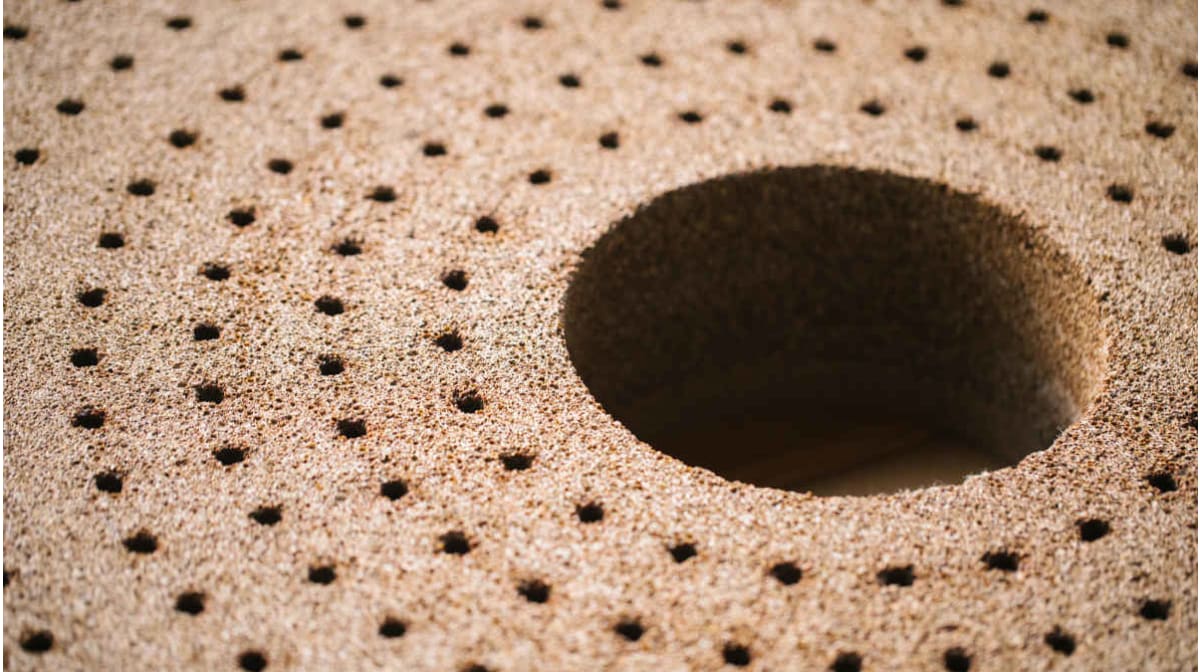
When working with traditional spring-grinding wheels, one of the biggest questions is how to handle different materials on the same machine. It’s a common issue: “I need to work with both carbon steel wire and stainless steel wire with the same grindring wheels.”
The issue is that the wheel structure and abrasive type can’t be generic: porosity, pressure resistance, and mechanical behavior must match the material being removed. The experts at Mole e Abrasivi Ermoli help clarify these points.
How to choose a versatile wheel for different materials
The right combination of structure and abrasive allows the wheel to work efficiently and prevents issues like overheating, loss of geometry, or marks on the spring surface. Open structures clear chips better and keep temperatures lower, making them suitable for stainless steel wires, which tend to clog the wheel. Closed structures offer better flatness and work well on carbon steel, which produces a drier, less adhesive chip.
Flatness of the working track is essential because it directly affects the accuracy of spring ends. However, high flatness usually means a stiffer structure, while a versatile wheel needs some flexibility to handle materials with different behavior.
How to balance flatness and flexibility
In theory, every material should have its own dedicated wheel, but this isn’t practical in real production. For this reason, Mole e Abrasivi Ermoli provides selected structure-and-abrasive combinations that offer the best ratio between flatness, mechanical stability and versatility.
These solutions let operators grind both carbon steel and stainless steel springs, as long as machine parameters are adjusted: pressure, wheel speed, feed rates and dressing cycles.
The goal is to avoid surface deformation, keep flatness consistent when switching materials and limit overheating.
Ermoli technical support
When mixed applications are involved, an Ermoli technician always assists during the first test to define the proper method. The operator receives support in setting machine parameters and managing the shift between carbon and stainless steel, ensuring stable, controlled grinding that maintains spring geometry.
The result is a more predictable process, consistent surface quality and longer wheel life, even under changing conditions.
If you are looking for an experienced partner in choosing and installing wheels for versatile use, contact the Ermoli team through the provided references.

