Wire tools


Optimizing the microstructure and production process of hard metal drawing dies
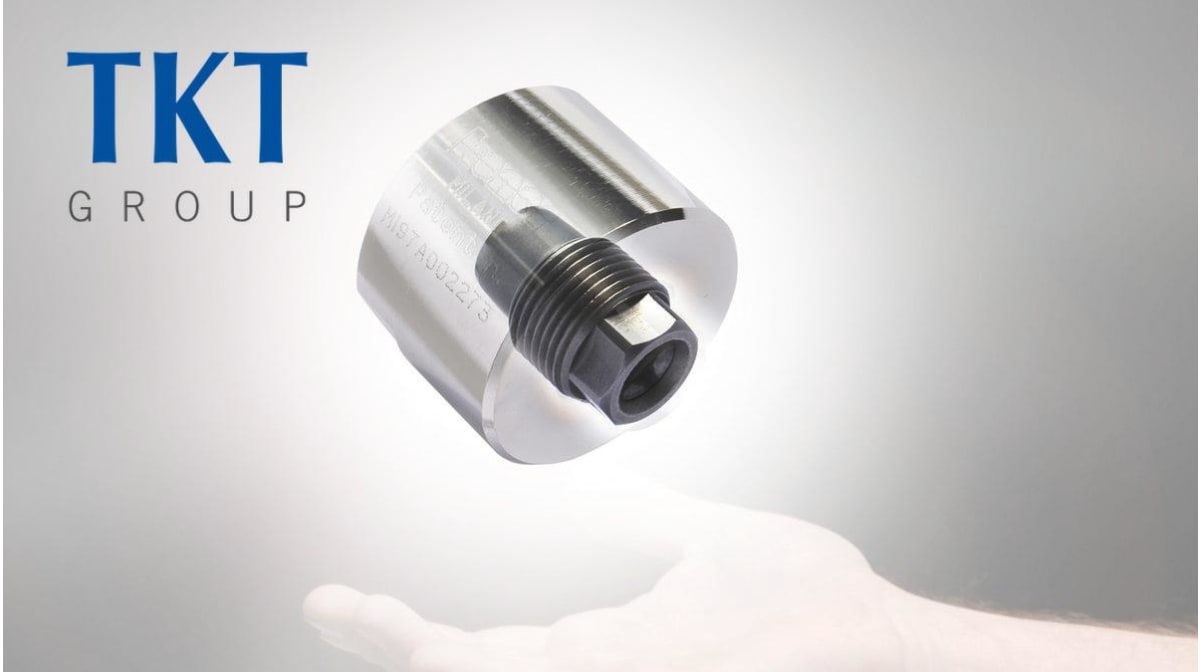
Koner (TKT Group) together with the University of Trento and the University of Milan, has worked on the chemical composition and the production process of its drawing dies.
In particular, the work has focused on avoiding:
- Eta phase or free carbon
- Cobalt lakes
- Microstructure inhomogeneity
- Residual porosity and microporosity
Another objective of the work is an ultrafine grain size. Together, these steps are meant to obtain increased hardness, increased wear resistance, and high toughness, which in turn mean increased drawing die life, reduction of downtime, and higher customer productivity.
Optimization of microstructure: carbide grain size
The first line of work concerned the carbide grain size. Two grades were compared. The binder content was kept constant, at 6.0% Co in both grades, while the percentage of grain growth inhibitor was increased, from 0.3% in Grade 1 to 0.5% in Grade 2. The WC grain size (DWC) went from 0.8 to 0.6 µm. According to Koner, the result was lower porosity, reduced grain size, and much longer die life.
| Grade | WC (%) | DWC (µm) | Co (%) | DCo (µm) | Grain growth inhibitor (%) | Density (g/cm³) | Hardness (HV30) | Fracture toughness (MPa m½) |
|---|---|---|---|---|---|---|---|---|
| 1 | 93.7 | 0.8 | 6.0 | 0.9 | 0.3 | 14.83 | 1750 ± 4 | 10.08 ± 0.28 |
| 2 | 93.5 | 0.6 | 6.0 | 0.9 | 0.5 | 14.88 | 1880 ± 45 | 9.27 ± 0.10 |

Figure 1. SEM micrographs of Grade 1 (left) and Grade 2 (right), 5 µm scale bar.
Lower roughness for a longer die life
A decreased DWC leads to higher hardness and lower roughness that increase the wear resistance of the nib. Figure 2 shows the roughness measured for a DWC of 0.8 µm and of 0.6 µm. According to Koner the result is a much longer die life.
.

Figure 2. The nib of a drawing die, SEM micrographs of the surface for DWC 0.8 µm and 0.6 µm, and the corresponding roughness values and profiles.
Development of the production process: compaction pressure
The second area of work was the production process. On a WC (0.6 µm)-6wt.% Co grade, increased compaction pressure reduces residual porosity and microporosity, leading to higher hardness and toughness.
| Low compaction pressure | High compaction pressure | |
|---|---|---|
| Density (g/cm³) | 14.82 | 14.89 |
| Porosity (vol.%) | 0.53 | 0.34 |
| Microporosity (area %) | 0.39 ± 0.07 | 0.10 ± 0.03 |
| Hardness (HV30) | 1855 ± 22 | 1880 ± 45 |
| Fracture toughness (MPa m½) | 9.16 ± 0.09 | 9.27 ± 0.10 |

Figure 3. Optical micrographs (top, 200 µm scale bar) and SEM micrographs (bottom, 5 µm scale bar) at low (left) and high (right) compaction pressure.
Development of the production process: sintering atmosphere
On a WC (0.8 µm)-10wt.% Co grade, Koner reports that a modification of the sintering atmosphere from N₂ to H₂ facilitates the debinding process, leading to a grade with higher hardness.
WC (0.8 µm)-10wt.% Co sintered in N₂ and in H₂
| N₂ | H₂ | |
|---|---|---|
| Density (g/cm³) | 14.30 | 14.40 |
| Porosity (vol.%) | 0.35 | 0.29 |
| Microporosity (area %) | 0.18 ± 0.08 | 0.10 ± 0.03 |
| Hardness (HV30) | 1541 ± 6 | 1573 ± 11 |
| Fracture toughness (MPa m½) | 11.0 ± 0.3 | 10.3 ± 0.09 |

Figure 4. Optical micrographs (top, 200 µm scale bar) and SEM micrographs (bottom, 5 µm scale bar) of the grade sintered in N₂ (left) and in H₂ (right).
A production process traced step by step
The production process starts from powder metallurgy and goes through pressing, sintering, lab control, assembling, grinding and polishing, and final control and packaging.

Figure 5. The production process of Koner’s drawing dies.
Koner R&D: two new hard metal grades
In the last year, Koner R&D has developed two new grades of hard metal powders, tested in two different fields. Both grades are studied to increase the wear resistance but without compromising the toughness of the hard metal.
| Grade name | Hardness (HRA) | Density (g/cm³) | Application |
|---|---|---|---|
| G3A | 90.5 | 14.30 | HC: PC strand, PC wire, ropes |
| K05G | 94.2 | 15.30 | LC: welding wire/wet drawing |

Figure 6. Microstructure of grade G3A (left) and grade K05G (right), 50 µm scale bar.
The Koner drawing dies range
The Koner range of drawing dies includes:
- Shaped dies, made according to customer specification
- Long nibs (25x28), for better lubrication and increased die life
- PCD and NND dies
- Wet drawing dies (12x10), with very high wear resistance

Figure 7. From left to right: shaped dies, long nibs, PCD and NND dies, and wet drawing dies.
For more information on TKT Group and its research with the University of Trento and the University of Milan, the new G3A and K05G grades, and the full range of Koner drawing dies, contact the team directly via the references on the online stand.
About TKT Group
TKT Group brings together Tecnovo and Koner, offering a comprehensive range of lubricants, drawing dies, machinery, and cleaning solutions. Both companies are members of ACIMAF.
Founded in 1945 and headquartered in Milan, Italy, Tecnovo specializes in lubricants and auxiliary chemicals for wire drawing and wire processing. Its product portfolio includes dry drawing lubricants, liquid compounds for wet drawing, greases, and rod and wire coatings. Tecnovo provides technical support throughout the process, from product selection to on-site testing at customers' facilities.
Koner is a leading manufacturer of wire drawing dies and related tooling. Its product range includes tungsten carbide nibs, tungsten carbide and diamond drawing dies, as well as carbide tools and accessories.

