
The impact of Middle East tensions on global steel trade
Escalating military tensions involving Iran, the United States and Israel—and the resulting restrictions around the Strait of Hormuz—are starting to ripple through the steel value chain, primarily via higher energy bills and logistics disruption. Market sources cited by SteelRadar say rising oil and natural gas expectations could lift steelmaking costs, while maritime uncertainty is already pushing freight rates higher and lengthening lead times.
Strait of Hormuz pressure hits freight and steel flows
The Strait of Hormuz is not only critical for energy flows (according to sources, it handles about 20% of global oil trade), but also a key shipping lane for steel and raw materials. If the situation persists, market participants warn of a threefold impact: higher energy costs, heightened risks to raw material and semi-finished supply (including scrap and slab), and freight-driven price pressure—a combination that could tighten availability and lift finished steel prices.
Chinese exports slow as shipping risks rise
Trade disruptions are already visible on the export side. Reuters reports that some Chinese steel exporters have paused offers to Middle East customers as shipping through the Strait “grinds to a near halt,” with freight rates rising and insurers canceling coverage. The Gulf has become China’s second-largest export market, taking about 16% of China’s steel exports last year, and traders say vessel availability and the lack of reliable freight guidance are hindering new quotes.
GMK Center adds that the Strait is the main route for Chinese steel into the Persian Gulf and that analysts expect shipments to the region to decline sharply in the short term, potentially pressuring China’s domestic market and steel prices. It also flags risks to Middle East supply, noting that Iran’s absence could hit semi-finished availability; in 2024, Iranian billet and slab exports averaged about 250,000 tons per month.
Potential spillover effects for Europe
For Europe, the same source highlights a second-order risk: recent GCC-to-EU flows could be threatened if disruptions persist, citing ~165,000 tons of Saudi hot-rolled coil and ~130,000 tons of UAE hot-dip galvanized coil imported into the EU in 2H 2025 under safeguard exemptions—shipments now exposed to logistics uncertainty.
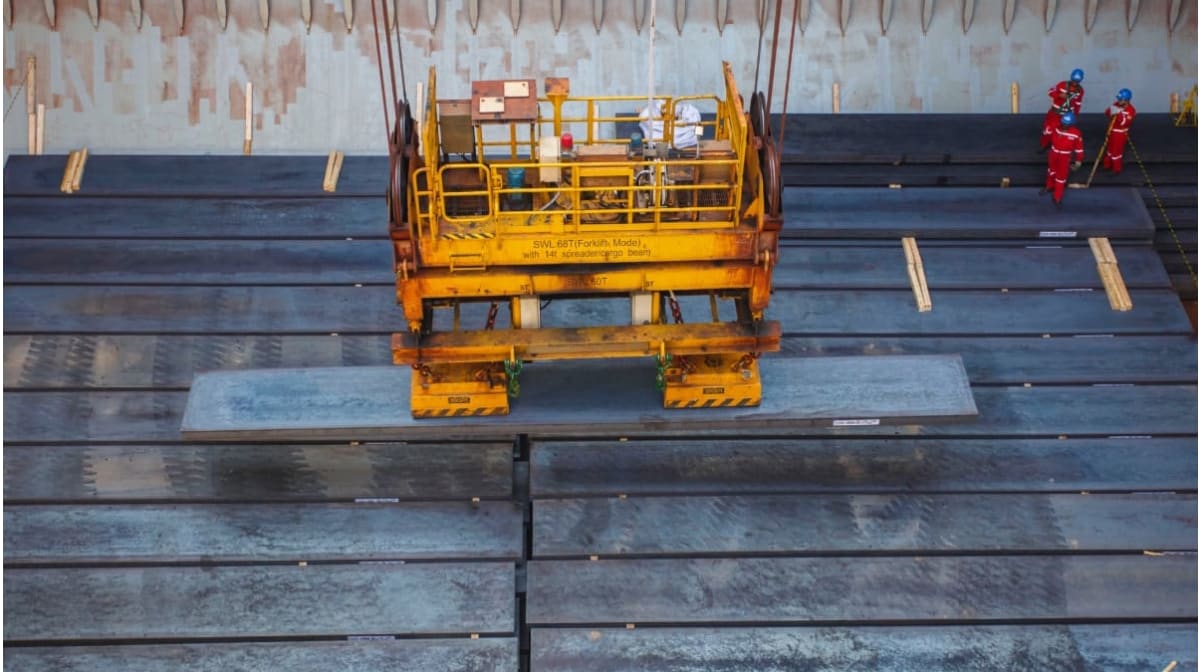
Image by worldsteel
You could be interested in reading:
Latest steel and metal industry news – Wire, tube, sheet metal & fasteners focus
