Rollers and coatings


Wire slipping on capstans: PAGANONI® solutions (Mario Nava)
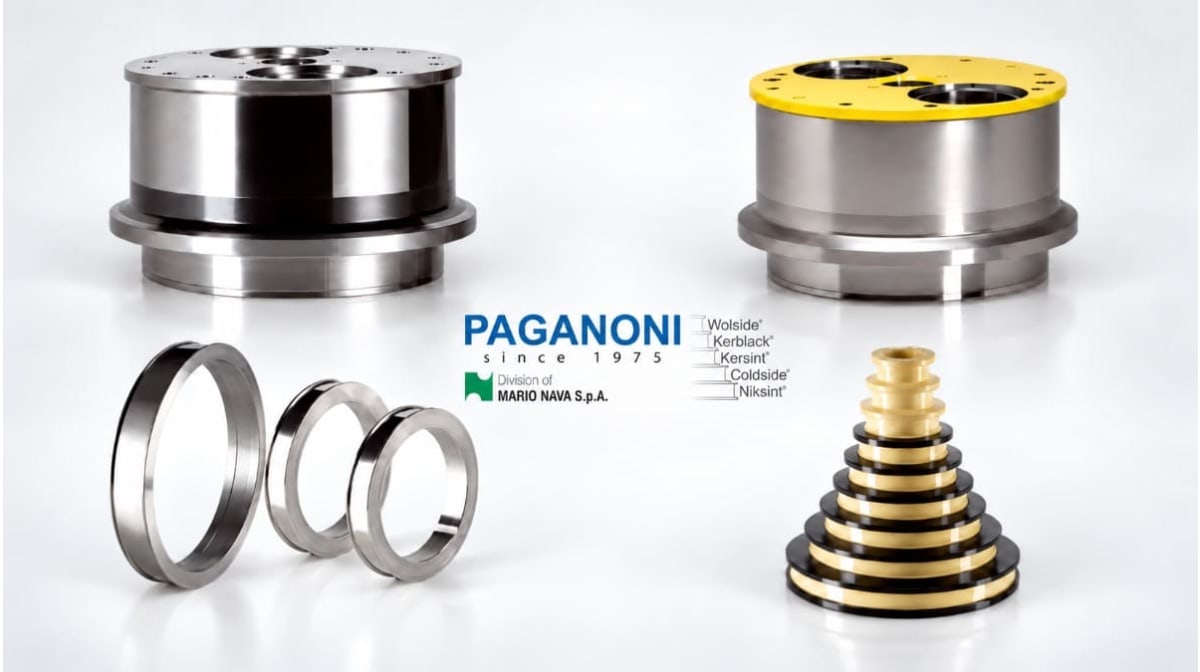
In wire drawing, the capstan provides the pulling force needed to draw the wire through the die. This force is transferred by friction through the pulling band, the surface around which the wire wraps. When contact becomes unstable, unwanted slip can occur.
PAGANONI®, a division of Mario Nava S.p.A., has been developing coatings and solutions for the contact surfaces of pulling components since the 1970s.
When slip becomes a problem
On slip-type drawing machines, mainly used for wet drawing of copper and aluminum and in multi-wire lines, slip is part of the process. On non-slip machines, typical of dry drawing of steel, it is instead an anomaly that can cause surface marks, diameter variations, overheating, and pulling band wear.
The most common causes include pulling band wear, lubricant build-up, too few wraps, capstan speeds that do not match wire elongation, and insufficient or unstable back tension. Some of these issues can be resolved by adjusting the line, but as long as the pulling band remains damaged, any adjustment will only provide a temporary solution.
Four solutions for different wire drawing requirements
The choice of coating or material depends on the process and the component to be protected. PAGANONI® offers four solutions:
- KERBLACK®: a coating that can be applied to capstans, reels, rings, and cones. It significantly reduces the coefficient of friction, eliminates galvanic corrosion problems, and allows higher production speeds while preserving the wire's surface quality.
- COLDSIDE®: a tungsten carbide-based coating offering high resistance to friction and wire slip. It is particularly suitable for capstans used in drawing ribbed wire for reinforced concrete and can also be applied to finished or worn components.
- WOLSIDE®: a hard metal coating based on special tungsten carbides, produced through a hot fusion process. Suitable for both dry and wet drawing, it is used on rings, cones, idler pulleys, capstans, and guide rollers. It offers high impact resistance and negligible wear.
- KERSINT®: a sintered technical ceramic based on zirconium oxide, used to manufacture complete components or inserts, including drawing cones, roughing rings for copper and aluminum wire drawing, and multi-groove rollers for multi-wire machines. It is suitable for wet drawing on slip-type machines thanks to its resistance to wear and corrosion in acidic baths.
Restoring worn capstans instead of replacing them
A worn pulling band does not necessarily mean that a new capstan is needed. Through its capstan and pulley refurbishment service, Paganoni restores the original geometry by applying KERBLACK®, WOLSIDE®, or COLDSIDE® to worn areas. The process generally also includes internal cleaning to remove limescale deposits.
According to PAGANONI®, a refurbished and coated component can deliver better performance than a new, uncoated capstan, at a lower cost than replacement.
Inspection and quality control
Paganoni performs dynamic balancing, dimensional inspections, and surface roughness checks in-house, issuing a final inspection certificate.
Regular inspections of pulling bands also help identify early signs of wear: recurring marks on the wire, shiny or dull areas on the pulling band, and the need to frequently adjust capstan speeds or the number of wraps.
For machine manufacturers and wire producers, keeping the pulling band in good condition means reducing the risk of unwanted slip and helping maintain process stability.
Want to learn more about PAGANONI® coatings or explore the possibility of refurbishing worn capstans and pulleys? Contact the company using the details provided on this page for more information.

