
The silent transformation of the wire industry
The wire industry is undergoing a significant transformation driven by automation, energy efficiency and digitaliszation. While wire drawing technology itself remains stable, production processes are evolving rapidly to meet new efficiency, cost and traceability requirements. This article explores the key trends shaping the future of wire manufacturing.
While public debate focuses on tariffs, overcapacity, and geopolitical tensions, a quieter shift is reshaping the wire industry from within. The drawing process itself has not changed in its fundamentals — it remains a mature, highly engineered technology — yet the way plants are organized, monitored, and optimized is evolving.
Rather than a revolution in fundamental mechanics, this is a structural transformation in how operational efficiency and competitive margins are engineered.
Automation in the wire industry: from optional to essential
Automation is no longer limited to large-scale producers. Medium-sized wire drawers are increasingly integrating automated coil handling systems, robotic palletising, and digital process control to reduce downtime, and labor dependency.
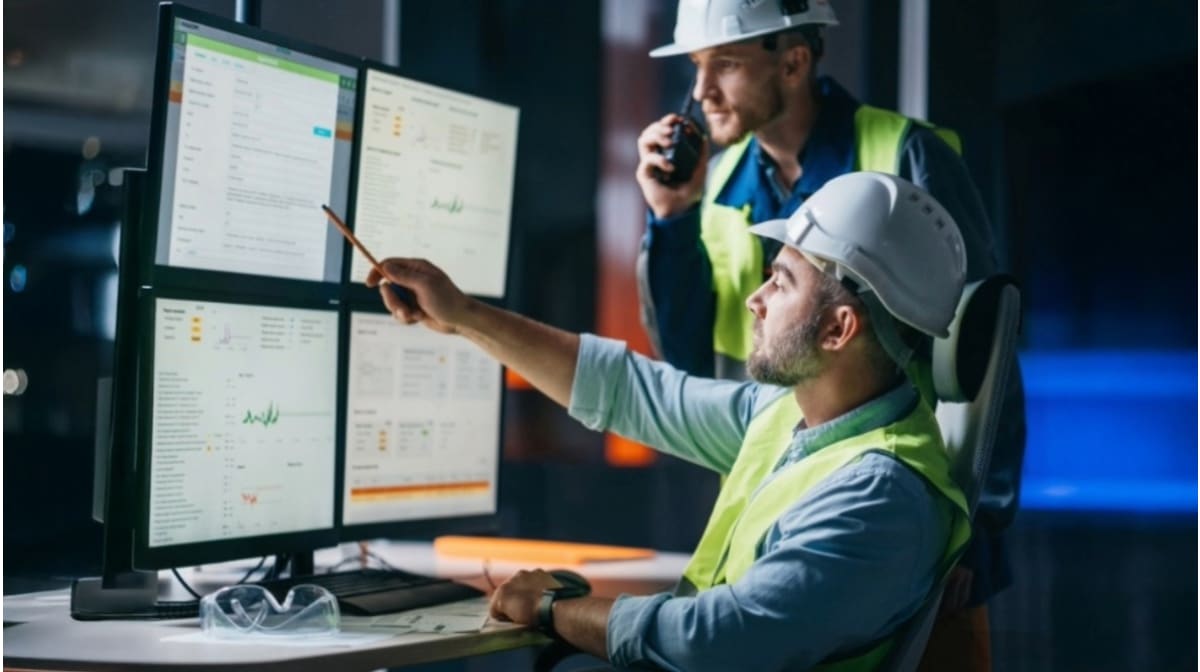
In-line diameter measurement, surface inspection systems and real-time wire tension monitoring are increasingly moving from premium upgrades toward expected baseline capabilities — at least on modern lines serving demanding applications. The objective is clear: reduce scrap rates, stabilize quality, and improve traceability, especially for automotive, energy, and high-spec industrial applications.
The labor factor also plays a role. Skilled operators remain essential, but demographic pressure and rising labor costs are accelerating investments in semi-autonomous production cells and predictive maintenance systems. In many regions, workforce availability is becoming almost as critical as raw material supply. Rather than replacing know-how, automation is being used to preserve it — embedding experience into repeatable, controlled processes.
It is worth noting that wire drawing remains a cost-sensitive industry. Unlike sectors such as food processing or medical manufacturing, where automation investments are supported by higher margins, wire producers must achieve advanced capabilities within tight economic constraints — making the business case for every upgrade a careful calculation.
Energy efficiency in wire production: a key cost factor
Energy has become one of the most decisive cost variables in wire production. Multi-pass drawing, annealing, and heat treatment remain energy-intensive, particularly in markets exposed to volatile electricity and gas prices.
As a result, producers are intensifying efforts in:
- high-efficiency motors and variable speed drives
- heat recovery systems in annealing lines
- lubrication optimization to reduce friction losses
- process redesign to eliminate unnecessary passes
In many plants, lubricant conditioning, filtration quality, and bath stability are receiving renewed attention, as their impact on friction, die life, and surface quality directly influences both energy consumption and scrap levels.
Energy monitoring platforms now provide real-time consumption data at machine level, allowing technical managers to benchmark performance across shifts and facilities.
In this context, energy efficiency is no longer framed only as a sustainability target. It is a core element of margin protection.
Digitalization in wire manufacturing: data-driven production
Perhaps the most meaningful shift is happening at data level. Production data that once remained confined to individual machines is increasingly integrated into plant-wide management systems.
As connectivity increases, attention to data governance, access control, and operational cyber security is also becoming part of production strategy rather than purely an IT concern.
MES platforms, advanced analytics, and predictive maintenance tools allow producers to optimize die sequences, anticipate failures, and extend tooling life — a key cost factor in fine and ultra-fine wire drawing. Data is also increasingly used to correlate die wear, lubrication conditions, and drawing forces, enabling more systematic die management strategies rather than reactive replacement. The same data is now beginning to feed sector-specific AI models capable of supporting real-time process adjustments — moving from passive monitoring toward active optimization. For demanding applications such as EV cables, traceability and process consistency are becoming contractual requirements rather than added value.
Gradual, but structural
The wire industry has always adapted to raw material cycles and market fluctuations. What differentiates the current phase is the structural nature of the changes underway.
Automation, energy optimization, and digital integration are not short-term responses to temporary market pressure. They reflect a long-term repositioning of the industry toward higher efficiency, greater transparency, and more resilient production models.
The transformation may be gradual rather than disruptive, but it is redefining cost structures, operational standards, and competitive benchmarks — especially where the three levers converge into a single, integrated strategy. In a mature industry such as wire drawing, that kind of change can be decisive — and its impact will shape competitiveness well into the next decade.
How these trends translate into real production environments will become clearer at the upcoming wire 2026 exhibition (April 13–17), where the Wire & Cable Forum will feature a full program of conferences organized by leading industry associations. As Editor-in-Chief of Expometals, I will also have the pleasure of moderating the ACIMAF session on Tuesday, April 14.
This article was originally published in IWMA Insider, March 2026.
Image credit: Adobe Stock
